
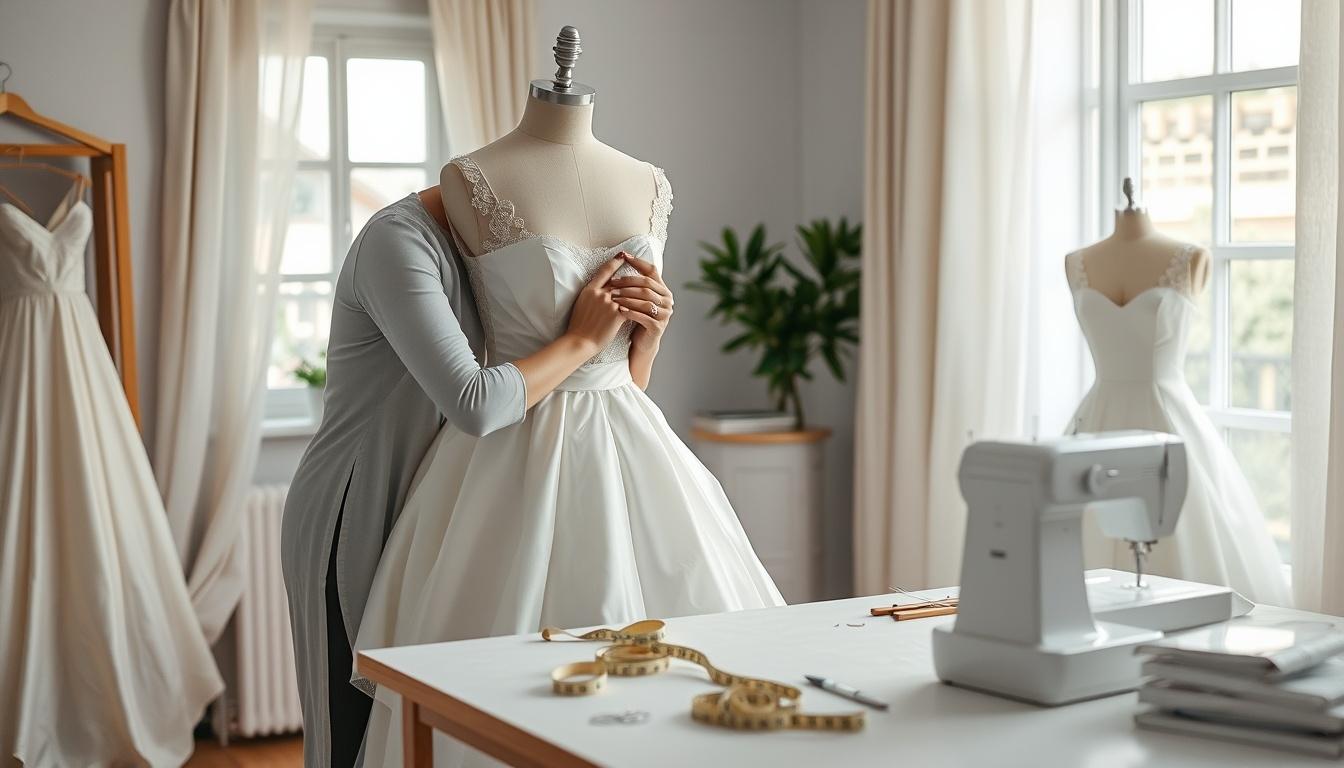
How Bridal Alterations Are Planned
Bridal and occasionwear alterations begin with an inspection of the garment construction, fabric, and requested fit. This first review helps define what can be adjusted, what needs careful handling, and how many fittings may be needed before the final collection.
For bridal gowns, common work can include hem and train adjustment, bodice and strap refitting, and bustle or fastening changes. Occasion dresses may also need shaping at the waist, length refinement, or small structural corrections to improve comfort and balance.
Each fitting is shaped around the gown, the fabric, and the event timeline.
A careful alteration plan helps the dress move well, sit properly, and stay aligned with the original design.
A quote is prepared after the fitting review, not before. If additional work becomes necessary, it is discussed and approved first so the alteration plan stays clear and controlled from start to finish.
Final checks are completed at collection to confirm the fit and review the finished garment again. Care and pressing notes can also be shared, and original thread or trim matching is used where available.